Adult vaccination: which vaccines adults need, and why
Vaccination is treated in India as something that ends in childhood. It does not. A short list of vaccines matters in adult life — more so with diabetes, heart or lung disease, or after 50 — and this guide sets out what each one is for and what the evidence actually shows.
ভারতে টিকাকরণকে শিশুদের বিষয় বলে ধরে নেওয়া হয়। আসলে তা নয়। প্রাপ্তবয়স্ক জীবনেও কয়েকটি টিকা গুরুত্বপূর্ণ — বিশেষত ডায়াবেটিস, হৃদরোগ বা ফুসফুসের রোগ থাকলে, অথবা ৫০ বছরের পরে।
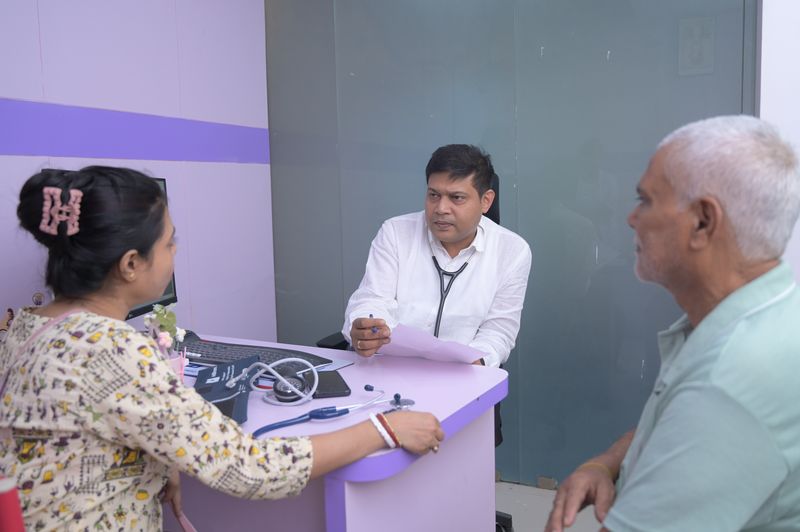
Adult vaccination is the use of vaccines after the childhood immunisation schedule has ended. The vaccines most often relevant to Indian adults are influenza (annually), pneumococcal conjugate vaccine, hepatitis B, recombinant zoster vaccine for shingles from age 50, a tetanus–diphtheria–pertussis booster, and HPV. Which of these applies to a particular person depends on age, existing conditions such as diabetes or chronic kidney, heart or liver disease, current medicines, pregnancy and previous vaccination history — so the schedule is decided at a consultation rather than read off a list. Dr Soumya Ghosh, MD (General Medicine), advises on and administers adult vaccination at Uttarbanga Clinic, Sunity Road, Cooch Behar.
Key facts
- Six vaccines account for most adult vaccination in India: influenza, pneumococcal, hepatitis B, recombinant zoster (shingles), Tdap and HPV.
- Influenza vaccine is given once a year because the circulating strains change and protection wanes over a season — not because the first dose failed.
- In a Danish cohort of 241,551 adults with diabetes, influenza vaccination was associated with 17% lower all-cause mortality over nine seasons.
- Recombinant zoster vaccine (Shingrix) was 97.2% effective against shingles in adults aged 50 and over in the ZOE-50 trial; efficacy falls to about 73% by year ten.
- India records an estimated 127,000 influenza-associated respiratory and circulatory deaths a year (95% CI 64,000–190,000).
- Meningococcal ACWY vaccination is a mandatory Saudi entry requirement for Hajj and Umrah, at least 10 days before arrival.
- Yellow fever vaccination in India can only be given at a government-designated centre — this clinic is not one, and cannot issue that certificate.
Why does adult vaccination get overlooked in India?
India runs one of the largest childhood immunisation programmes in the world, and it works. Adult vaccination has no equivalent public programme, so it falls to individual consultations, and in practice it rarely comes up: the patient does not ask, and a busy outpatient visit is spent on the complaint that brought them in. The result is that a person with twenty years of type 2 diabetes will have had their HbA1c checked sixty times and never once been asked whether they have had a pneumococcal vaccine.
A word on a statistic you may encounter. It is frequently claimed that 95% of vaccine-preventable deaths in India occur in adults. That figure has been repeated across review articles for years, and when traced backwards it terminates in a 2008 newspaper report; the citation chain does not lead to any Indian dataset. It is not used on this page. The case for adult vaccination is strong enough on properly sourced evidence, which is what follows.
Which vaccines do adults in India actually need?
Six vaccines account for the great majority of adult vaccination. The table below is a summary, not a prescription — the right schedule for any individual depends on their conditions, medicines, pregnancy status and what they have already received.
| Vaccine | Who it is chiefly for | Schedule |
|---|---|---|
| Influenza (inactivated) | Adults 60+, diabetes, heart, lung, kidney or liver disease, pregnancy, obesity, healthcare workers | One dose every year |
| Pneumococcal conjugate (PCV20) | Adults 50+ and younger adults with chronic conditions or immunosuppression | Single dose if not previously vaccinated |
| Hepatitis B | All adults up to 59; older adults with diabetes or other risk factors | Three doses, 0–1–6 months |
| Recombinant zoster (shingles) | Adults 50+, and immunocompromised adults from 18 | Two doses, 2–6 months apart |
| Tdap / Td | All adults; one dose in every pregnancy | Tdap once, then Td every 10 years |
| HPV | Routine to age 26; ages 27–45 by individual decision | Two or three doses depending on age at first dose |
Why is the influenza vaccine given every year?
Two separate reasons, often confused. The first is that influenza viruses drift: the surface proteins the immune system recognises change enough from season to season that last year's antibodies match this year's virus imperfectly, and the vaccine composition is reformulated accordingly. The second is that protection from a single dose wanes measurably over the course of one season. Neither means the previous dose failed.
The vaccine is a moderate performer, and it is worth being straightforward about that. In well-matched seasons, influenza vaccination reduces the risk of a flu-related medical visit by 40–60% in the general population.[1] Against hospitalisation in adults aged 65 and over, a systematic review across five European seasons found effectiveness of about 40%,[2] and US surveillance for the 2023–24 season put it at 42%.[3] A vaccine that halves your chance of a bad outcome is not a wall; it is a substantial shift in the odds, repeated annually.
- Vaccine effectiveness
- The reduction in risk observed in real-world use, as distinct from efficacy, which is the reduction measured under trial conditions. Effectiveness is almost always the lower of the two, and for influenza it varies year to year depending on how well the vaccine strains match what actually circulates.
- Antigenic drift
- The gradual accumulation of mutations in the influenza surface proteins haemagglutinin and neuraminidase. It is why influenza vaccine composition is reviewed twice a year by WHO, separately for the northern and southern hemispheres.
When is the influenza season in North Bengal?
This matters more in Cooch Behar than most people assume. India does not have the single sharp winter influenza peak seen in Europe and North America. In the tropical and sub-tropical belt, transmission tracks the monsoon, and much of the country sees a substantial rainy-season peak between roughly June and September, with a smaller winter wave in some northern regions.[4] The practical implication is that timing a flu shot to a northern-hemisphere October calendar may miss the local peak entirely. Timing is discussed at the consultation rather than fixed by a rule.
What does influenza vaccination do for someone with diabetes?
This is the strongest single argument for adult vaccination in an Indian general medicine practice, because India has an estimated 101 million adults with diabetes.[5] Two large cohort studies are worth quoting precisely.
In a Danish nationwide cohort of 241,551 adults on glucose-lowering medication, followed across nine influenza seasons, vaccination was associated with 17% lower all-cause mortality (hazard ratio 0.83, 95% CI 0.78–0.88) and 16% lower cardiovascular mortality.[6] In an English primary-care cohort of 124,503 adults with type 2 diabetes, vaccination was associated with fewer hospital admissions for stroke (30% lower), heart failure (22% lower) and pneumonia or influenza (15% lower), and with 24% lower all-cause mortality.[7]
Two caveats belong with those numbers rather than in a footnote. Both are observational studies, so they show association, not proof of cause; people who accept vaccination differ systematically from those who do not, and no statistical adjustment fully removes that. And in the English study the reduction in myocardial infarction admissions did not reach statistical significance (IRR 0.81, 95% CI 0.62–1.04) — you will see “19% fewer heart attacks” quoted from this paper, and that specific claim is not supported by it.
Is there a real link between influenza and heart attacks?
Yes, and it is one of the more striking findings in the field. A self-controlled case-series study in Ontario linked laboratory-confirmed influenza infections to hospital admissions for acute myocardial infarction, and found the risk of a heart attack was 6.05 times higher in the seven days following confirmed influenza than in the comparison period (95% CI 3.86–9.50).[8] The design is elegant because each patient is their own control, which removes confounding by individual risk factors. The caveats are that it applies to laboratory-confirmed influenza rather than any winter illness, and that only 20 events fell inside the seven-day window — a large relative risk built on small absolute numbers.
On the other side of the equation, a meta-analysis of five randomised trials in 9,059 patients with established cardiovascular disease found influenza vaccination associated with 26% fewer myocardial infarctions (RR 0.74, 95% CI 0.56–0.97).[9] The same analysis found no significant effect on stroke in this population — a figure of “30% fewer strokes” circulates widely and belongs to the diabetes cohort above, not to cardiac patients.
Which pneumococcal vaccine, and how many doses?
Lower respiratory infection remains the leading infectious cause of death worldwide, with an estimated 2.50 million deaths in 2023, and the burden falls disproportionately on children under five and adults over 70.[10] Pneumococcus is the commonest bacterial cause in adults.
Adult pneumococcal vaccination has become simpler. The 20-valent conjugate vaccine, PCV20, covers twenty serotypes in a single dose and — unlike the older 13-valent and 15-valent products — does not require a follow-up polysaccharide dose in adults who have not been vaccinated before. In October 2024 the US Advisory Committee on Immunization Practices lowered the routine age for adult pneumococcal vaccination from 65 to 50.[11] PCV20 received Indian import permission in November 2024 and became commercially available for adults in August 2025; it is a private-market vaccine and not inexpensive. Anyone who has previously received PCV13 or PPSV23 still has a place in the schedule, but the interval differs, which is why the vaccination history matters.
How well does the shingles vaccine work, and for how long?
Recombinant zoster vaccine (Shingrix) is unusually effective for a vaccine given to older adults. In the ZOE-50 trial it prevented 97.2% of shingles cases in adults aged 50 and over (95% CI 93.7–99.0);[12] pooled ZOE-50 and ZOE-70 data gave 91.3% in adults aged 70 and over.[13] It was licensed in India in April 2023 for adults aged 50 and above.
The figure quoted in most marketing is “over 90%”, and that is true only for the early years in people with normal immunity. Long-term follow-up shows efficacy declining to about 73% by year ten,[14] and in immunocompromised groups it is substantially lower from the start — 68.2% after autologous stem-cell transplant, for instance.[15] It is still a very good vaccine. It is not a permanent one.
Why is hepatitis B vaccination raised with people who have diabetes?
Because of a specific and often over-stated finding. US surveillance data showed that adults aged 23 to 59 with diabetes had about twice the odds of acute hepatitis B compared with adults without diabetes (odds ratio 2.1, 95% CI 1.6–2.8) — but in adults aged 60 and over the same analysis found no statistically significant increase (OR 1.5, 95% CI 0.9–2.5).[16] The mechanism proposed was shared glucose-monitoring equipment. The blanket statement that “diabetics have double the hepatitis B risk” drops the age band, which is the part that changes what you do.
In any case the recommendation has since broadened past diabetes: since 2022, universal hepatitis B vaccination is advised for all adults aged 19 to 59 regardless of risk factors.[17]
Is HPV vaccination only for girls?
No. HPV causes cancer at a minimum of six sites — cervix, oropharynx, anus, penis, vagina and vulva — and in current US data the oropharynx, a site affecting mostly men, has overtaken the cervix as the commonest HPV-associated cancer site.[18] In India the cervical burden remains very large: cervical cancer is the second most common cancer in Indian women, with 127,526 new cases recorded in GLOBOCAN 2022.[19]
Where care is needed is the upper age band. Vaccination is routine to age 26. Between 27 and 45 it is not a routine recommendation but a shared clinical decision — benefit is lower because many adults have already been exposed to the common types, and whether it is worthwhile depends on the individual's circumstances.[20] The 2026 Indian consensus update takes a somewhat more permissive line for this age band than the US guidance does. Either way, it is a conversation, not a default.
Which vaccines are needed for travel, and for Hajj or Umrah?
Saudi Arabia requires a valid quadrivalent meningococcal ACWY certificate from all Hajj, Umrah and seasonal-worker arrivals aged one year and over, administered at least ten days before arrival. A conjugate vaccine certificate is valid for five years and a polysaccharide certificate for three; if the certificate does not state which type was given, it is treated as valid for three years only.[21] That last detail catches people out, so the vaccine type is recorded explicitly on any certificate issued here.
One thing this clinic cannot do: yellow fever. In India, yellow fever vaccination and the International Certificate of Vaccination or Prophylaxis may only be issued at centres designated by the Directorate General of Health Services under the International Health Regulations, and all of the designated centres are government facilities.[22] If you are travelling to a yellow-fever country you will be directed to the nearest designated centre. Since July 2016 a yellow fever certificate is valid for life, so an old one may still be current.
How is an adult vaccination plan actually decided?
By taking a history, which sounds obvious and is the step most often skipped. What is asked: age; existing conditions, particularly diabetes, chronic kidney disease, heart failure, COPD, liver disease and asplenia; current medicines, especially steroids, immunosuppressants and chemotherapy; pregnancy or planned pregnancy; allergy history, particularly to a previous dose; occupation and any household contact who is immunocompromised; travel plans; and every vaccine already received, with dates where they exist. Any doses given are recorded so that intervals and boosters can be tracked, since the schedule for several of these vaccines spans months or years.
A note on the Indian guidance most often cited here. The Indian Consensus Guidelines on Adult Immunization: 2026 Update was released on 5 March 2026 with 23 collaborating professional associations. It is a consensus document published by the Association of Physicians of India Maharashtra State Chapter together with IMA Mumbai West — it is not a peer-reviewed or PubMed-indexed guideline, and it is used on this page as consensus opinion rather than as primary evidence.[23]
সংক্ষেপে (বাংলায়)
টিকা শুধু শিশুদের জন্য নয়। বড়দের জন্যও কয়েকটি টিকা আছে যেগুলি বয়স ও রোগ অনুযায়ী দেওয়া হয় — ইনফ্লুয়েঞ্জা (প্রতি বছর), নিউমোকক্কাল, হেপাটাইটিস বি, শিংলস (৫০ বছরের পর), টিটেনাস-ডিপথেরিয়া বুস্টার এবং HPV। ডায়াবেটিস, হৃদরোগ, কিডনি বা ফুসফুসের দীর্ঘমেয়াদি রোগ থাকলে সংক্রমণে জটিলতার ঝুঁকি বেশি, তাই এই রোগীদের ক্ষেত্রে টিকার প্রশ্নটি বেশি গুরুত্বপূর্ণ। ভ্রমণের আগেও (বিশেষত হজ ও উমরাহ) নির্দিষ্ট টিকা ও সার্টিফিকেট লাগে। কোন টিকা আপনার জন্য প্রযোজ্য তা বয়স, রোগ, ওষুধ ও আগের টিকার ইতিহাস দেখে ঠিক করা হয় — নিজে থেকে তালিকা মিলিয়ে নেওয়া ঠিক নয়। কোচবিহারের উত্তরবঙ্গ ক্লিনিকে ডাঃ সৌম্য ঘোষের কাছে প্রাপ্তবয়স্কদের টিকা সংক্রান্ত পরামর্শ ও টিকাকরণ করা হয়।

Written and medically reviewed by Dr Soumya Ghosh, MBBS, MD (General Medicine)
Consultant Physician (Internal Medicine), Uttarbanga Clinic, Cooch Behar · Assistant Professor, Dept. of General Medicine, MJN Medical College & Hospital, Cooch Behar
West Bengal Medical Council Reg. No. 67751 — verify on the Indian Medical Register · ORCID 0009-0004-1686-5540 · Last reviewed
Frequently asked questions
Do adults really need vaccines, or is vaccination just for children?
Adults need a short specific list. Influenza vaccine annually, pneumococcal conjugate vaccine, hepatitis B, recombinant zoster vaccine from age 50, a tetanus–diphtheria–pertussis booster and HPV are the six that account for most adult vaccination in India. The list becomes more important, not less, with diabetes, heart disease, kidney disease or age over 60, because those conditions raise the risk of complications from the infections concerned.
Why does the flu vaccine have to be repeated every year?
For two separate reasons. Influenza viruses mutate enough between seasons that the vaccine composition is reformulated twice a year by WHO, and protection from a single dose also wanes over the course of one season. Repeating the dose is not a sign that the previous one failed.
Does the flu vaccine reduce heart attacks?
In people who already have cardiovascular disease, a meta-analysis of five randomised trials in 9,059 patients found 26% fewer myocardial infarctions in those vaccinated (RR 0.74, 95% CI 0.56–0.97). Separately, the risk of a heart attack is about six times higher in the week after a laboratory-confirmed influenza infection. The evidence does not support a claim of fewer strokes in cardiac patients — that figure comes from a different study in people with diabetes.
Which vaccines matter most if I have diabetes?
Influenza annually and pneumococcal conjugate vaccine are the two with the clearest rationale, with hepatitis B and recombinant zoster vaccine considered by age and circumstance. Large cohort studies in Denmark and England found influenza vaccination in adults with diabetes associated with lower all-cause mortality and fewer admissions for stroke, heart failure and pneumonia. These are observational findings, so they show association rather than proof of cause.
When should I take the flu vaccine in Cooch Behar?
Timing here is not the same as the northern-hemisphere autumn schedule. Much of India sees a monsoon-season influenza peak between roughly June and September, with a smaller winter wave in northern regions, so the best month is discussed at the consultation rather than fixed by a calendar rule.
How long does the shingles vaccine protect for?
Recombinant zoster vaccine was 97.2% effective in adults aged 50 and over in its pivotal trial, but efficacy declines with time — long-term follow-up shows about 73% by year ten. Protection is also lower from the start in people who are immunocompromised. It is a highly effective vaccine, but not a permanent one.
Can I get a yellow fever certificate at this clinic?
No. In India, yellow fever vaccination and the International Certificate of Vaccination or Prophylaxis can only be issued at centres designated by the Directorate General of Health Services, and all designated centres are government facilities. You will be directed to the nearest one. Note that since July 2016 a yellow fever certificate is valid for life, so a certificate from an earlier trip may still be current.
What vaccination is required for Hajj or Umrah?
Saudi Arabia requires a valid quadrivalent meningococcal ACWY certificate from all arrivals aged one year and over, given at least ten days before arrival. A conjugate vaccine certificate is valid for five years and a polysaccharide one for three years — and if the certificate does not state which type was given, it is treated as valid for three years only. Come four to six weeks before travel so there is time for the full schedule.
Is HPV vaccination worthwhile for adults over 26?
Between 27 and 45 it is an individual decision rather than a routine recommendation, because many adults have already been exposed to the common HPV types and the expected benefit is correspondingly lower. It is worth discussing rather than assuming either way.
Do you keep a record of the vaccines given?
Yes. Doses given at the clinic are recorded with dates so that intervals, second doses and boosters can be tracked — several adult vaccine schedules run over months or years, and the record is what makes the next step correct. Please also bring any vaccination record you already have.
Adult vaccination advice with Dr Soumya Ghosh
Uttarbanga Clinic, Sunity Road, near Police Line Chowpathi, Ward 20, Cooch Behar 736101. Monday to Saturday, 10:00–20:00. Walk-in or book ahead.
References and guidelines
- Centers for Disease Control and Prevention. Benefits of Flu Vaccination. cdc.gov
- Rondy M, El Omeiri N, Thompson MG, et al. Effectiveness of influenza vaccines in preventing severe influenza illness among adults: a systematic review and meta-analysis of test-negative design case-control studies. J Infect 2017;75(5):381–394. doi:10.1016/j.jinf.2017.09.010
- Centers for Disease Control and Prevention. Interim 2023–2024 influenza vaccine effectiveness estimates. cdc.gov/flu
- Chadha MS, Potdar VA, Saha S, et al. Dynamics of influenza seasonality at sub-regional levels in India. PLoS One 2015;10(5):e0124122. doi:10.1371/journal.pone.0124122
- Anjana RM, Unnikrishnan R, Deepa M, et al. Metabolic non-communicable disease health report of India: the ICMR-INDIAB national cross-sectional study (ICMR-INDIAB-17). Lancet Diabetes Endocrinol 2023;11(7):474–489. doi:10.1016/S2213-8587(23)00119-5
- Modin D, Claggett B, Køber L, et al. Influenza vaccination is associated with reduced cardiovascular mortality in adults with diabetes: a nationwide cohort study. Diabetes Care 2020;43(9):2226–2233. doi:10.2337/dc20-0229
- Vamos EP, Pape UJ, Curcin V, et al. Effectiveness of the influenza vaccine in preventing admission to hospital and death in people with type 2 diabetes. CMAJ 2016;188(14):E342–E351. doi:10.1503/cmaj.151059
- Kwong JC, Schwartz KL, Campitelli MA, et al. Acute myocardial infarction after laboratory-confirmed influenza infection. N Engl J Med 2018;378(4):345–353. doi:10.1056/NEJMoa1702090
- Omidi F, Zangiabadian M, Shahidi Bonjar AH, et al. Influenza vaccination and major cardiovascular risk: a systematic review and meta-analysis of clinical trials. Sci Rep 2023;13:20235. doi:10.1038/s41598-023-47690-9
- GBD 2023 Lower Respiratory Infections Collaborators. Global, regional, and national burden of lower respiratory infections. Lancet Infect Dis 2026;26(4). healthdata.org
- Kobayashi M, Leidner AJ, Gierke R, et al. Use of 21-valent pneumococcal conjugate vaccine and lowering of the age-based recommendation for pneumococcal vaccination among adults. MMWR Morb Mortal Wkly Rep 2025;74:1–8. cdc.gov/mmwr
- Lal H, Cunningham AL, Godeaux O, et al. Efficacy of an adjuvanted herpes zoster subunit vaccine in older adults (ZOE-50). N Engl J Med 2015;372(22):2087–2096. doi:10.1056/NEJMoa1501184
- Cunningham AL, Lal H, Kovac M, et al. Efficacy of the herpes zoster subunit vaccine in adults 70 years of age or older (ZOE-70). N Engl J Med 2016;375(11):1019–1032. doi:10.1056/NEJMoa1603800
- Strezova A, Godeaux O, Aggarwal N, et al. Long-term persistence of recombinant zoster vaccine efficacy through year 11. eClinicalMedicine 2025;83:103241. See also Boutry C, et al. Clin Infect Dis 2022;74(8):1459–1467.
- Bastidas A, de la Serna J, El Idrissi M, et al. Effect of recombinant zoster vaccine on incidence of herpes zoster after autologous stem cell transplantation. JAMA 2019;322(2):123–133. doi:10.1001/jama.2019.9053
- Centers for Disease Control and Prevention. Use of hepatitis B vaccination for adults with diabetes mellitus: recommendations of the ACIP. MMWR Morb Mortal Wkly Rep 2011;60(50):1709–1711. cdc.gov/mmwr
- Weng MK, Doshani M, Khan MA, et al. Universal hepatitis B vaccination in adults aged 19–59 years: updated recommendations of the ACIP. MMWR Morb Mortal Wkly Rep 2022;71(13):477–483. cdc.gov/mmwr
- Centers for Disease Control and Prevention. Cancers associated with human papillomavirus, United States, 2018–2022. cdc.gov/cancer
- Bray F, Laversanne M, Sung H, et al. Global cancer statistics 2022: GLOBOCAN estimates of incidence and mortality worldwide. CA Cancer J Clin 2024;74(3):229–263. gco.iarc.fr
- Meites E, Szilagyi PG, Chesson HW, et al. Human papillomavirus vaccination for adults: updated recommendations of the ACIP. MMWR Morb Mortal Wkly Rep 2019;68(32):698–702. cdc.gov/mmwr
- Ministry of Health, Kingdom of Saudi Arabia. Health requirements for travellers to Saudi Arabia for Hajj and Umrah, 1447H. moh.gov.sa
- Directorate General of Health Services, Ministry of Health and Family Welfare, Government of India. Designated yellow fever vaccination centres. ihpoe.mohfw.gov.in
- Vora A, Tiwaskar M, Lele J, eds. Indian Consensus Guidelines on Adult Immunization: 2026 Update. Association of Physicians of India, Maharashtra State Chapter, with IMA Mumbai West; released 5 March 2026. Consensus document; not peer-reviewed or PubMed-indexed.
This page is general health information written and reviewed by a registered medical practitioner. It is not medical advice, does not create a doctor–patient relationship, and is not a substitute for consultation with a doctor who has examined you. Diagnosis and treatment are individualised after clinical assessment. Medicines mentioned here are prescription-only and must be taken under medical supervision. See the editorial and medical review policy. Last reviewed .