"Gas" and abdominal pain — what it actually turns out to be
One word covers a great deal of ground here. The useful surprise is how little of it is the stomach: in an Indian emergency series, the urinary tract accounted for nearly as much abdominal pain as every surgical cause combined, while acid disease accounted for one case in twelve.
পেটে ব্যথা ও দীর্ঘদিনের গ্যাস-অম্বল — আসল কারণ কী কী হতে পারে, কোন পরীক্ষা কী উত্তর দেয়, আর কেন বছরের পর বছর ওষুধ চালানো সমাধান নয়।
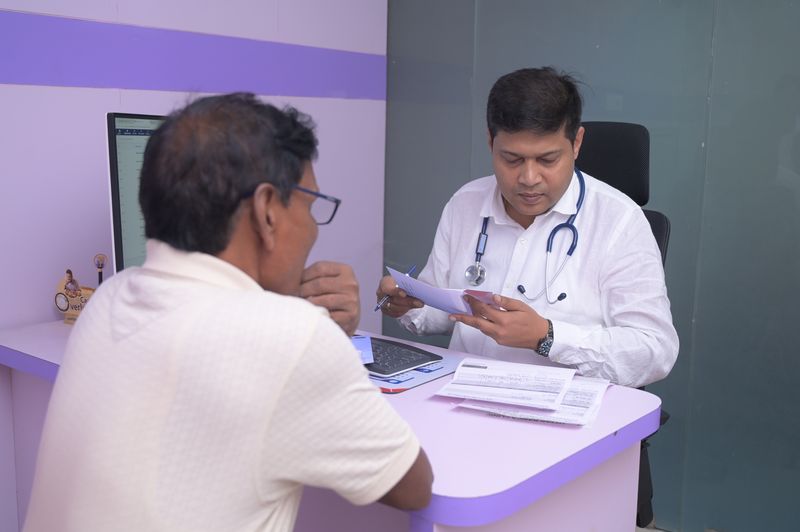
Abdominal pain is not usually an acid problem. In a study of 264 consecutive patients presenting with non-traumatic acute abdominal pain to an Indian emergency department, surgical causes accounted for 31.5%, the urinary tract for 29.2% (ureteric colic 16.3%, urinary infection 12.5%), gastrointestinal causes for 22.8% — of which acid peptic disease was only 8.0% — obstetric and gynaecological causes 7.2%, and 9.5% had no diagnosis. The practical consequence is that a person given a proton pump inhibitor for years may have been treated for the wrong organ. The causes worked through here are gastritis and reflux, intestinal parasites, irritable bowel syndrome, urinary infection and stones, pain referred from the spine or arising in the abdominal wall, appendicitis and other surgical causes, and inflammation of the bowel. Endoscopy is not available at Uttarbanga Clinic at present and is referred. Dr Soumya Ghosh, MD (General Medicine), assesses abdominal pain at Uttarbanga Clinic, Sunity Road, Cooch Behar.
Do not wait for an appointment if any of these apply
- Vomiting blood, or vomit that looks like coffee grounds
- Black, tarry, sticky stools
- Severe abdominal pain that came on suddenly and is getting worse
- Pain with a rigid, board-like abdomen that hurts to move or cough
- Chest tightness or upper abdominal pain with sweating or breathlessness — this may be the heart
- Pain with fever and shaking chills, especially with loin pain or burning urine
- Difficulty swallowing, persistent vomiting, or weight loss you did not intend
- Severe pain in an older person with little to find on examination
Call 108 or go directly to the emergency department at MJN Medical College & Hospital, Cooch Behar. Do not drive yourself.
Two traps. Upper abdominal discomfort attributed to gas is a common way a heart attack presents here — see the chest pain guide. And in a person over 75, severe pain with an unremarkable abdomen can be a blocked intestinal artery, which above that age is a commoner cause of acute abdomen than appendicitis and carries a mortality of 30–70%.
Key facts
- In an Indian emergency series of 264 patients with abdominal pain: urinary causes 29.2% (stones 16.3%, infection 12.5%), surgical 31.5%, acid peptic disease only 8.0%, no diagnosis 9.5%.
- In a West Bengal hospital series, abdominal pain was 14.2% of all emergency admissions, and about 58% of it was non-surgical.
- 76% of urinary E. coli in India were ciprofloxacin-resistant in 2023, and 57% resistant to co-trimoxazole — while nitrofurantoin held at 16% and fosfomycin at 4%.
- Irritable bowel syndrome in India is mostly mixed or diarrhoea-predominant; constipation-predominant IBS is only 0.3%, and more than two-thirds of Indian patients are men — the opposite of Western series.
- Of 100 patients with chronic abdominal pain referred to a pain clinic, 43 had pain arising in the abdominal wall, not inside the abdomen.
What abdominal pain actually turns out to be
Start with the numbers, because they reorder everything that follows. In 264 consecutive patients presenting to an Indian emergency department with non-traumatic acute abdominal pain, the final diagnoses were:
| Group | Share | Largest single diagnoses |
|---|---|---|
| Surgical | 31.5% | Appendicitis 10.6%, perforation 7.2%, obstruction 5.3%, cholecystitis 4.2% |
| Urinary tract | 29.2% | Ureteric colic 16.3%, urinary infection 12.5% |
| Gastrointestinal | 22.8% | Pancreatitis 11.0%, acid peptic disease 8.0%, gastroenteritis 3.8% |
| Obstetric and gynaecological | 7.2% | — |
| No diagnosis reached | 9.5% | — |
Two things jump out. The urinary tract accounts for almost as much abdominal pain as every surgical cause put together — and acid peptic disease, the thing nearly everyone here is treated for, accounted for one case in twelve.
A West Bengal series says something compatible. At a hospital in Durgapur, abdominal pain accounted for 1,236 of 8,688 emergency admissions (14.2%), of which roughly 42% were surgical and 58% non-surgical; within the surgical group appendicitis was 38.9%, gallbladder disease 21.0% and renal or ureteric colic 14.2%.[2]
These are emergency-department figures, so they over-represent severe and acute presentations relative to a clinic. But the direction of the correction holds: the differential for abdominal pain is much wider than the stomach, and pantoprazole is not a diagnostic strategy.
Is it the stomach at all?
Before the list, two exclusions that change the urgency.
The heart. Upper abdominal discomfort attributed to gas is one of the commonest ways a heart attack presents in this district, and relief from an antacid proves nothing at all. If the discomfort is central, comes on with exertion, or comes with sweating or breathlessness, it is assessed as chest pain. The chest pain guide sets out why an antacid response and a normal ECG both mislead.
The airway. Less obviously, bronchospasm presents as chest and upper abdominal tightness and gets treated as reflux for months. In one series of patients whose only complaint was chest pain, the median delay before asthma was diagnosed was four months, with some carrying the symptom over ten years while being treated for reflux oesophagitis. The breathlessness guide covers this.
Gastritis, reflux and Helicobacter pylori
This remains a real and common cause — it is simply not the whole of it. H. pylori is the part worth finding, because it is a bacterial infection that responds to a two-week course and, once eradicated, does not usually return. It causes peptic ulcers and is a risk factor for gastric cancer.
Regional prevalence is less well established than it should be. The largest Indian meta-analysis puts national prevalence near 58% with a West Bengal band around 54%, but it draws on few Bengal studies and appears in a low-profile venue, so it is indicative rather than authoritative.[3] The most solid regional figure is from Sikkim, in the eastern Himalaya bordering North Bengal: 27% of 1,539 consecutive upper GI endoscopies were positive, higher in men (31%) than women (22%).[4]
Test-and-treat before endoscopy is reasonable in younger patients without alarm features, which is what both the international and the recent Indian consensus recommend.[5]
When endoscopy is needed — and why the age-60 rule does not transfer
The American and Canadian guideline recommends endoscopy for dyspepsia at 60 and above, and explicitly does not recommend routine endoscopy for alarm features under 60 — while noting that a lower threshold is warranted for people born and raised in South and South-East Asia.[5] That caveat is the important part. In 294 Indian patients aged 18 to 60 with dyspepsia and at least one alarm feature, 65.3% had organic disease and 15.6% had an upper gastrointestinal malignancy; the authors concluded the Western rule is unsafe applied here.[6] The Indian consensus published in 2026 prioritises endoscopy above 60 with symptoms of a month or more, with test-and-treat first in younger patients.[7] The position taken here: alarm features get endoscopy at any adult age.
The same study carries its own corrective — 34.7% of that alarm-feature group had a completely normal endoscopy.[6] Alarm features are a reason to look, not a prediction of what will be found.
- Alarm features
- Weight loss that was not intended. Difficulty swallowing, or food sticking. Persistent vomiting. Vomiting blood, or black tarry stools. A mass felt in the abdomen. Anaemia found on a blood test. New symptoms starting after the age of 50.
The pantoprazole problem
A great many people arrive on a proton pump inhibitor taken for years, started by someone for a reason nobody now remembers, with no test ever done. Two things are wrong with that. It is a treatment standing in place of a diagnosis — and given the aetiology table above, there is a real chance the organ being treated is not the organ causing the pain. And these drugs are not consequence-free: Indian audits found 57% of inpatient PPI use outside approved indications in one study and 46% of prescriptions inappropriate in another.[8][9] Documented associations with long-term use include community-acquired pneumonia (OR 1.49, and OR 2.10 in the first month), hypomagnesaemia (RR 1.43) and small-intestinal bacterial overgrowth (OR 2.28).[10] The absolute risks are small, but they are being accepted in exchange for a benefit nobody has checked.
The urinary tract — the group most often missed
Nearly a third of abdominal pain in the Indian series above was urological, and much of it did not announce itself with urinary symptoms. Urinary infection presenting as abdominal pain accounted for 12.5% of all presentations on its own.[1] A urine test is therefore not an afterthought here; it is one of the first tests.
Stones
Ureteric colic was the single commonest individual diagnosis in that series at 16.3%.[1] The pain is characteristic once heard: sudden, severe, coming in waves, in the loin and radiating to the groin, with the patient unable to find a comfortable position — in contrast to peritonitis, where any movement is avoided.
Around 12% of the Indian population is described as prone to urinary stones, and the "stone belt" named in the literature includes West Bengal alongside Maharashtra, Gujarat, Rajasthan, Punjab, Haryana, Delhi, Madhya Pradesh and Bihar.[11] That belt is a narrative assertion rather than a West Bengal prevalence measurement, and no district figure for Cooch Behar exists — but working in high temperatures and low fluid intake are established risk factors,[12] which is worth knowing for anyone doing outdoor work through a Bengal summer. Stones recur: pooled across 53 studies and 488,130 patients, about 17.4% of patients had a recurrence, with prior surgery (OR 3.18), prior stones (OR 1.40) and higher BMI (OR 1.06) among the predictors.[13]
Infection, pyelitis and pyelonephritis
Infection confined to the bladder produces burning, frequency and lower abdominal pain. When it ascends to the kidney it produces fever, shaking chills and loin pain — and that combination needs treating promptly rather than with another course of whatever was left in the cupboard.[14]
Which brings up the most treatment-changing fact on this page. India's national antimicrobial resistance network tested 33,882 urinary E. coli isolates in 2023, at sites including the Calcutta School of Tropical Medicine. The results:
| Antibiotic | Resistant |
|---|---|
| Ciprofloxacin | 76% |
| Cefotaxime | 75% |
| Ceftriaxone | 70% |
| Co-trimoxazole | 57% |
| Amoxicillin-clavulanate | 56% |
| Nitrofurantoin | 16% |
| Fosfomycin | 4% |
Three in four urinary infections in India will not respond to ciprofloxacin, and more than half will not respond to co-trimoxazole. Those are the two drugs most often bought over the counter for burning urine. A separate national network reports the same direction.[16] This is why a urine culture is worth doing rather than guessing, and why a course from a shop that "did not work" usually means the wrong drug rather than the wrong diagnosis.
Parasites
Intestinal worms and protozoa cause abdominal pain, bloating and iron loss, and they are worth taking seriously here. They are also an area where the honest answer is less certain than the confident one.
The pooled Indian paediatric figures are Ascaris 25%, Trichuris 13% and hookworm 10%, with hookworm regionally highest in eastern India at 49%.[17] But that eastern figure rests almost entirely on Kolkata surveys from 1968 and 1978, and the only post-2000 North Bengal datapoint inside the same meta-analysis — a small Darjeeling study — found no hookworm at all.[17] Sanitation has changed a great deal in fifty years. So the claim that half of eastern India carries hookworm should not be repeated as a current fact, and no current North Bengal prevalence has been published.
What is measured recently: Giardia duodenalis in 6.8% of diarrhoeal patients in south-eastern West Bengal.[18] Amoebiasis carriage across India runs 3–23% asymptomatic and 0.64–11% symptomatic.[19]
On treatment, two points are worth being clear about. India's National Deworming Day covers ages 1 to 19 only — adults are not included.[20] The World Health Organization does recommend preventive treatment for defined adult groups: annual or biannual albendazole for women of reproductive age (15–49) where local soil-transmitted helminth prevalence is 20% or more, and it names tea-garden workers among high-risk occupations[21][22] — directly relevant to the North Bengal tea belt. Against that, a Cochrane review of community deworming found essentially no effect on haemoglobin (mean difference 0.06 g/dL, 95% CI −0.05 to +0.17), though it studied children only.[23] Empirical deworming is therefore reasonable in specific situations and is not a substitute for finding the cause of pain.
One consequence worth knowing: a gut infection can leave lasting bowel symptoms. Post-infectious irritable bowel syndrome follows about 11.5% of episodes of acute gastroenteritis, and the risk is highest after protozoal infection, intermediate after bacterial and lowest after viral.[24] Which connects this section to the next.
Irritable bowel syndrome
IBS is a positive diagnosis, not a label applied when tests are normal. Community prevalence in India is about 4.0%, from a door-to-door survey of 4,767 people — in a sample where 17.3% reported abdominal pain of some kind.[25]
Two features make Indian IBS different from the Western picture, and both matter for recognising it:
- The subtype is different
- Mixed IBS is commonest at 1.7%, then diarrhoea-predominant at 1.5%, while constipation-predominant IBS is only 0.3%.[25] Someone waiting to be constipated before considering IBS will miss most of it.
- The sex ratio is reversed
- More than two-thirds of Indian IBS patients are men, against a female predominance in Western series.[26]
The Indian consensus — 28 statements from the Indian Neurogastroenterology and Motility Association with the Indian Society of Gastroenterology — recommends diagnosis on symptoms with baseline investigations only, reserving extensive testing for alarm features, and prefers the Rome III criteria over Rome IV for Indian patients because Rome IV under-detects here.[26][27] Its alarm features are: onset after 45, anaemia, blood in stool, weight loss, symptoms waking you at night, fever, an abdominal mass, or a family history of bowel cancer.[26]
Pain from the abdominal wall and the spine
This is the group most often investigated in the wrong place, sometimes for years, because everyone keeps looking inside the abdomen for a pain arising in its wall.
Abdominal cutaneous nerve entrapment syndrome — a nerve trapped where it pierces the abdominal wall muscle — accounted for 1.7% of 5,111 emergency patients with abdominal pain.[28] Among patients with chronic abdominal pain the share is far higher: of 100 consecutive patients referred by gastroenterologists to a pain clinic, 43 had abdominal wall pain.[29]
It can be distinguished at the bedside in under a minute. Carnett's test asks the patient to tense the abdominal wall by lifting the head and shoulders while the tender spot is pressed: pain from the wall gets worse, pain from inside gets better as the muscle shields it. In 130 outpatients this gave a positive likelihood ratio of 2.91 and a negative likelihood ratio of 0.19.[30] The tell-tale history is pain in one small spot the patient can point to with a fingertip, unchanged by meals or bowels, worse on sitting up or turning in bed.
Pain referred from the thoracolumbar spine is real but rarer — thoracic disc herniation accounts for under 1% of all disc herniations, and presentation as abdominal pain is at case-report level.[31] The pattern to recognise is a band of pain following one dermatome round from the back, sometimes with numbness, changing with posture rather than with food.
And shingles causes abdominal pain for several days before any rash appears, along a thoracic dermatome and not crossing the midline — a diagnosis that may be impossible to make until the rash arrives, and one that is worth waiting a few days for rather than escalating investigations.[32]
Surgical causes
Appendicitis is the commonest, with a lifetime risk of 8.6% in men and 6.7% in women,[33] and it was 38.9% of surgical acute abdomen in the West Bengal series.[2] The Alvarado score is useful in one direction only: at a cut-off of 5 its sensitivity is 99%, so a low score genuinely argues against appendicitis, but at a cut-off of 7 its specificity is only 81% overall and 57% in men — a high score is not a licence to operate.[34]
Epiploic appendagitis deserves naming because it is benign and routinely mistaken for something that is not. Small fat-filled pouches on the outside of the colon can twist or clot, producing sharp, well-localised abdominal pain in someone who is otherwise entirely well — no fever, no vomiting, normal appetite. It accounts for 2–7% of patients initially suspected of having appendicitis or diverticulitis, is diagnosed on CT by a characteristic oval fatty lesion with a hyperattenuating ring, and resolves on its own within about two weeks with anti-inflammatory tablets. It does not need surgery.[35] Recognising it is the difference between two weeks of discomfort and an unnecessary operation.
Acute mesenteric ischaemia is the must-not-miss. It is rare — 0.09 to 0.2% of acute surgical admissions — but carries a mortality of 30 to 70%, and above the age of 75 it is a more prevalent cause of acute abdomen than appendicitis. The classic clue is pain out of proportion to the examination findings.[36]
Enteritis, colitis and infection
Typhoid remains a genuine cause of abdominal pain with fever here: modelled Indian incidence is 360 cases per 100,000 person-years, with a striking urban-rural gap (770 urban against 150 rural).[37] The fever guide covers how it is tested for and why the Widal test is unreliable.
Inflammatory bowel disease is less common in India than in the West but is rising while global incidence falls — 31,774 new cases and 270,719 prevalent cases in 2019, with age-standardised incidence increasing by 0.05 per 100,000 per year against a global decline of 0.18.[38] Anaemia complicates 47.7% of Indian IBD patients against 31.1% globally.[38] Blood in the stool, diarrhoea for weeks, weight loss or waking at night with symptoms takes the case out of the IBS category and into this one.
One diagnostic problem specific to India deserves mention: intestinal tuberculosis and Crohn's disease look almost identical, and the tests do not resolve it cleanly — interferon-gamma release assay sensitivity 74%, MTB-PCR 47%, and Xpert MTB/RIF only 23% on intestinal samples, so "no single finding can conclusively diagnose" either.[39] Quantified misdiagnosis rates in that pair exist only from Korea, not India. In a high-TB district this is a reason for specialist referral rather than a confident label.
What is actually done at the consultation
Where the pain is, what it does, and what changes it. Then Carnett's test, which costs nothing. Urine analysis is done early rather than late, because of how much of this turns out to be urological. Blood count, ESR or CRP, liver and kidney function, blood sugar. Stool examination where the history fits. H. pylori testing in persistent dyspepsia. Ultrasound is arranged at an imaging centre in Cooch Behar — there is no scanner at the clinic — and endoscopy is referred, with a dedicated service planned for 2027. Where infection is suspected, a urine culture is worth the wait, given what the resistance figures above show about guessing.
Reports are reviewed with you at follow-up, which is not charged within 10 days.
সংক্ষেপে (বাংলায়)
"গ্যাস" শব্দটা এখানে অনেক কিছু বোঝাতে ব্যবহার হয় — আর পেটে ব্যথার বেশিরভাগ কারণই আসলে পেটের নয়। ভারতের একটি জরুরি বিভাগের গবেষণায় ২৬৪ জন পেটে ব্যথার রোগীর মধ্যে দেখা গেছে: মূত্রনালীর কারণ ২৯.২% (পাথর ১৬.৩%, ইনফেকশন ১২.৫%) — যা অস্ত্রোপচারযোগ্য কারণের (৩১.৫%) প্রায় সমান। অথচ অ্যাসিডের রোগ মাত্র ৮%। তাই বছরের পর বছর প্যান্টোপ্রাজল খাওয়া অনেক সময় ভুল রোগের চিকিৎসা। এখানে যা যা দেখা হয়: গ্যাস্ট্রাইটিস ও বুকজ্বালা, কৃমি ও পরজীবী, আইবিএস, প্রস্রাবের সংক্রমণ ও কিডনির পাথর, মেরুদণ্ড থেকে ছড়িয়ে আসা স্নায়ুর ব্যথা, অ্যাপেন্ডিসাইটিস, অন্ত্রের প্রদাহ। একটি জরুরি সতর্কতা — ভারতে প্রস্রাবের জীবাণুর ৭৬% সিপ্রোফ্লক্সাসিনে কাজ করে না, তাই দোকান থেকে কেনা অ্যান্টিবায়োটিক প্রায়ই বিফল।

Written and medically reviewed by Dr Soumya Ghosh, MBBS, MD (General Medicine)
Consultant Physician (Internal Medicine), Uttarbanga Clinic, Cooch Behar · Assistant Professor, Dept. of General Medicine, MJN Medical College & Hospital, Cooch Behar
West Bengal Medical Council Reg. No. 67751 — verify on the Indian Medical Register · ORCID 0009-0004-1686-5540 · Last reviewed
Frequently asked questions
I have been taking pantoprazole for years. Is that a problem?
It is worth reviewing, and for a bigger reason than side effects. In an Indian emergency series, acid peptic disease accounted for only 8% of abdominal pain while the urinary tract accounted for 29% — so there is a real chance a long-running acid tablet is treating the wrong organ. Long-term use also carries small but real associations, including a raised risk of pneumonia. The right move is not to stop abruptly but to find out what is causing the pain and then withdraw the acid suppression.
I took an antibiotic for burning urine and it did not work. Why?
Most likely because it was the wrong antibiotic rather than the wrong diagnosis. In India in 2023, 76% of urinary E. coli were resistant to ciprofloxacin and 57% to co-trimoxazole — the two drugs most commonly bought over the counter for this. Nitrofurantoin and fosfomycin still worked in the great majority of cases. This is exactly why a urine culture is worth doing instead of guessing.
Could my pain be worms?
Possibly, and it is checked where the history fits — but the honest position is that current prevalence in North Bengal has not been published. The often-quoted figure that half of eastern India carries hookworm comes from Kolkata surveys done in 1968 and 1978, and the only recent North Bengal data found none at all. Giardia was found in 6.8% of diarrhoeal patients in West Bengal recently. India's deworming programme covers ages 1 to 19 only, so adults are not routinely treated, though the WHO does recommend it for women aged 15 to 49 and for tea-garden workers in high-prevalence areas.
The pain is in one small spot I can point to with a finger. Does that mean anything?
It means a great deal. Pain from the abdominal wall — a trapped nerve — is localised to a fingertip-sized spot, unchanged by meals or bowel movements, and often worse sitting up or turning in bed. It accounts for 43 of every 100 patients with chronic abdominal pain referred on to a pain clinic. There is a bedside test for it: pressing the spot while you tense your abdomen makes wall pain worse and pain from inside better. Say so at the consultation, because it is easy to confirm and easy to miss.
I am only 35. Do I really need an endoscopy?
Only if you have alarm features — weight loss, difficulty swallowing, vomiting blood, black stools, persistent vomiting, anaemia or a mass. If you do, then yes, at 35 as much as at 65. Indian data show 15.6% of patients aged 18 to 60 with dyspepsia plus an alarm feature had an upper GI cancer, which is why the Western rule of waiting until 60 is not applied here. Without alarm features, testing and treating for H. pylori comes first.
Everything came back normal but I still have pain. What now?
That is a real situation and it has real answers. Irritable bowel syndrome is a positive diagnosis rather than a leftover category — and note that in India it is mostly mixed or diarrhoea-predominant, so waiting to be constipated will miss it. Abdominal wall pain is the other common answer, and is found by examination rather than by scanning. About one in ten patients in the emergency series reached no diagnosis at all, and in that situation a defined review date is more useful than another round of the same tests.
Is endoscopy available at the clinic?
Not at present. Upper GI endoscopy is referred, and a dedicated endoscopy and abdominal sonography service is planned at Uttarbanga Clinic for 2027. Where endoscopy is needed it is arranged, and the report reviewed with you at follow-up, which is not charged within 10 days.
Assessment of abdominal pain with Dr Soumya Ghosh
Uttarbanga Clinic, Sunity Road, near Police Line Chowpathi, Ward 20, Cooch Behar 736101. Monday to Saturday, 10:00–20:00. Walk-in or book ahead.
Related guides
Chest pain
Why upper abdominal discomfort attributed to gas is a common way a heart attack presents.
Read the guide →Breathlessness
Bronchospasm presents as chest and upper abdominal tightness, and gets treated as reflux for months.
Read the guide →Joint pain
Regular painkillers for knees are a leading cause of ulcers and bleeding.
Read the guide →References and guidelines
- Chanana L, Jegaraj MAK, Kalyaniwala K, Yadav B, Abilash K. Clinical profile of non-traumatic acute abdominal pain presenting to an adult emergency department. J Family Med Prim Care 2015;4(3):422–5. doi:10.4103/2249-4863.161344
- Thakur JK, Kumar R. Clinical study of acute abdominal pain in adults. Int Surg J 2019;6(2). doi:10.18203/2349-2902.isj20190380
- Puzhakkal S, Mittal P, Thiruchelvam K. Prevalence of Helicobacter pylori in India: a systematic review and meta-analysis. Evidence Synthesis in Healthcare Connect 2025. doi:10.69709/ESHC.2025.123254. Indicative only — few West Bengal studies, low-profile venue.
- Dhakal OP, Dhakal M. Prevalence of Helicobacter pylori infection and pattern of gastrointestinal involvement in patients undergoing upper gastrointestinal endoscopy in Sikkim. Indian J Med Res 2018;147(5):517–520. doi:10.4103/ijmr.IJMR_1482_16
- Moayyedi P, Lacy BE, Andrews CN, et al. ACG and CAG clinical guideline: management of dyspepsia. Am J Gastroenterol 2017;112:988–1013. doi:10.1038/ajg.2017.154
- Kumari P, Machhan P, Sharma B, et al. Clinical significance of alarm features in patients with dyspepsia below 60 years of age. Indian J Gastroenterol 2022;41:430–439. doi:10.1007/s12664-022-01275-y
- Indian consensus on the management of dyspepsia. World J Gastrointest Pharmacol Ther 2026;17(1):112615. doi:10.4292/wjgpt.v17.i1.112615
- Venkataraman R, Rashid M, Shrestha H. Inappropriate use of proton pump inhibitors in an Indian tertiary care hospital. Curr Drug Saf 2020. doi:10.2174/1574886315666200311120151
- Juneja S, et al. Assessment of appropriateness of proton pump inhibitor prescriptions in a tertiary care hospital. J Pharm Care 2023;11(2). doi:10.18502/jpc.v11i2.13360
- Siau K, et al. Proton pump inhibitors: benefits, harms and deprescribing. Medicina 2025;61(9):1569. doi:10.3390/medicina61091569
- Das M, et al. The demographic diversity of food intake and prevalence of kidney stone diseases in the Indian continent. Foods 2019;8(1):37. doi:10.3390/foods8010037. Narrative review; the "stone belt" is an assertion, not a measured West Bengal prevalence.
- Sequira, Hebbar, Ravishanker N. Prevalence and associated risk factors of urolithiasis in India: a systematic review. Biomedicine 2023;43(2). doi:10.51248/.v43i02.2198
- Wang W, et al. Recurrence rate and risk factors of urinary stones: a systematic review and meta-analysis. BMC Urol 2022;22:62. doi:10.1186/s12894-022-01017-4
- Belyayeva M, Leslie SW, Rout P, Jeong JM. Acute pyelonephritis. StatPearls, NCBI Bookshelf NBK519537, 2024. ncbi.nlm.nih.gov
- National AMR Surveillance Network (NARS-Net). Annual Report 2023. National Programme on AMR Containment, National Centre for Disease Control, Ministry of Health & Family Welfare, Government of India; 2024. ncdc.mohfw.gov.in
- Indian Council of Medical Research. Annual Report 2023: Antimicrobial Resistance Surveillance Network. icmr.gov.in
- Chopra P, Shekhar S, Dagar VK, Pandey S. Prevalence and risk factors of soil-transmitted helminthic infections in the paediatric population in India: a systematic review and meta-analysis. J Lab Physicians 2023;15(1):4–19. doi:10.1055/s-0042-1751319
- Ghosal A, Sardar SK, Haldar T, et al. Molecular epidemiology of Giardia duodenalis in diarrhoeal patients of south-eastern West Bengal. Parasitol Res 2023. doi:10.1007/s00436-023-07956-7
- Gupta et al. Prevalence of amoebiasis in India: a systematic review and meta-analysis. Acta Parasitol 2022. doi:10.1007/s11686-022-00547-z
- Child Health Division, Ministry of Health & Family Welfare, Government of India. National Deworming Day Operational Guidelines. nhm.gov.in
- World Health Organization. Guideline: preventive chemotherapy to control soil-transmitted helminth infections in at-risk population groups. Geneva: WHO; 2017. ncbi.nlm.nih.gov
- World Health Organization. Soil-transmitted helminth infections — fact sheet. who.int
- Taylor-Robinson DC, Maayan N, Soares-Weiser K, Donegan S, Garner P. Deworming drugs for soil-transmitted intestinal worms in children. Cochrane Database Syst Rev 2015. doi:10.1002/14651858.CD000371.pub6
- Ghoshal UC. Postinfection irritable bowel syndrome. Gut Liver 2022;16(3):331–40. doi:10.5009/gnl210208
- Makharia GK, Verma AK, Amarchand R, et al. Prevalence of irritable bowel syndrome: a community-based study from northern India. J Neurogastroenterol Motil 2011;17(1):82–7. doi:10.5056/jnm.2011.17.1.82
- Ghoshal UC, Sachdeva S, Pratap N, et al. Indian consensus statements on irritable bowel syndrome in adults. Indian J Gastroenterol 2023;42(2):249–73. doi:10.1007/s12664-022-01333-5
- Ghoshal UC, et al. Rome IV criteria are less sensitive than Rome III for irritable bowel syndrome in Indian and Bangladeshi communities. Neurogastroenterol Motil 2023;35(6):e14579. doi:10.1111/nmo.14579
- van Assen T, Brouns JAGM, Scheltinga MR, Roumen RM. Incidence of abdominal cutaneous nerve entrapment syndrome (ACNES) in an emergency department. Scand J Trauma Resusc Emerg Med 2015;23:19. doi:10.1186/s13049-015-0096-0
- McGarrity TJ, et al. Results of a prospective evaluation of abdominal wall pain in patients referred to a pain clinic. Am J Gastroenterol 2000;95(7):1812–6, as reported in Am Fam Physician 2018;98(7):429–436. aafp.org
- Takada T, Ikusaka M, Ohira Y, Noda K, Tsukamoto T. Diagnostic usefulness of Carnett's test in psychogenic abdominal pain. Intern Med 2011;50(3):213–7. doi:10.2169/internalmedicine.50.4179
- Massé G, Al Khaldi M, Schwenter F, Boudier-Revéret M, Sebajang H. Thoracic disc herniation presenting as abdominal pseudohernia. J Surg Case Rep 2025;2025(1):rjae822. doi:10.1093/jscr/rjae822
- Centers for Disease Control and Prevention. Clinical features of shingles (herpes zoster), 10 May 2024. cdc.gov
- Addiss DG, Shaffer N, Fowler BS, Tauxe RV. The epidemiology of appendicitis and appendectomy in the United States. Am J Epidemiol 1990;132(5):910–25. mcgill.ca
- Ohle R, O'Reilly F, O'Brien KK, Fahey T, Dimitrov BD. The Alvarado score for predicting acute appendicitis: a systematic review. BMC Med 2011;9:139. doi:10.1186/1741-7015-9-139
- Salvaggio et al. Epiploic appendagitis: imaging findings and differential diagnosis. Insights Imaging 2019;10. doi:10.1186/s13244-019-0715-9
- Bala M, et al. Acute mesenteric ischemia: updated guidelines of the World Society of Emergency Surgery. World J Emerg Surg 2022;17:54. doi:10.1186/s13017-022-00443-x
- Cao Y, Lo NC, et al. The burden of typhoid fever in India: modelled estimates from surveillance data. J Infect Dis 2021;224(Suppl 5):S475. doi:10.1093/infdis/jiab187
- Giri S, Jena A, Kumar-M P, Muniswamy JR, Nath P, Sharma V. Burden of inflammatory bowel disease in India: analysis of the Global Burden of Disease study. Intest Res 2026;24(1):84–94. doi:10.5217/ir.2024.00134
- Jena A, Sharma V, et al. Distinguishing intestinal tuberculosis from Crohn's disease: a systematic review. BMC Gastroenterol 2023;23. doi:10.1186/s12876-023-02887-0
This page is general health information written and reviewed by a registered medical practitioner. It is not medical advice, does not create a doctor–patient relationship, and is not a substitute for consultation with a doctor who has examined you. Diagnosis and treatment are individualised after clinical assessment. Medicines mentioned here are prescription-only and must be taken under medical supervision. See the editorial and medical review policy. Last reviewed .